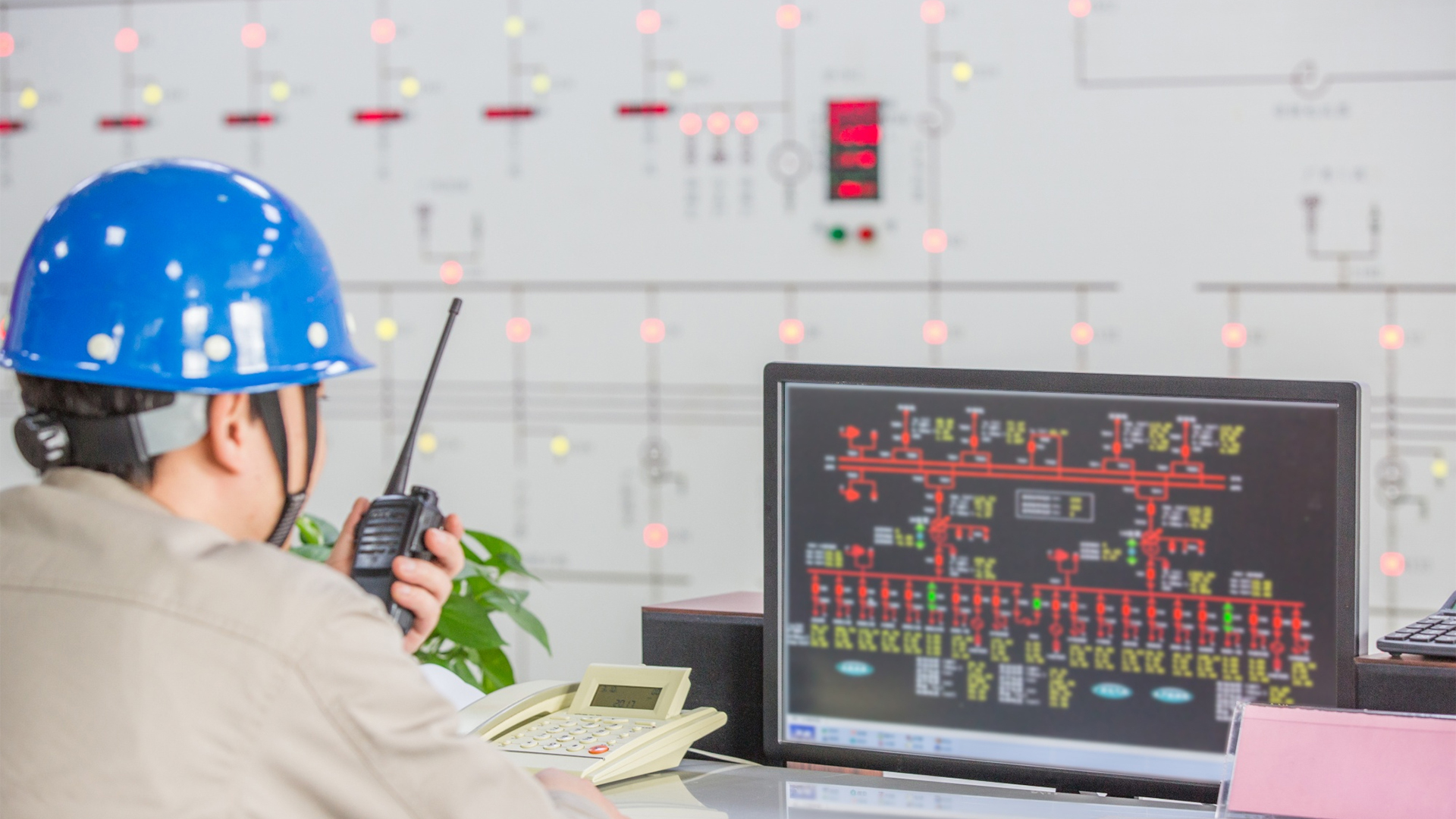

Get A Head Start With P&ID Training
 Download Brochure
Course overview
This training is designed to give participants the skills they need to fully comprehend how the plant operates, which will considerably improve their capacity to maintain and improve plant performance. The course will teach participants how to identify issues and make recommendations for fixes on a plant they have never seen using the documentation given.
This workshop shows why it is crucial to continue looking at the plant thoroughly in order to solve the problem because too often, plant improvements that are implemented only address the symptom rather than the underlying cause.
Participants will learn how to build a solution specifically for their particular facility and create documentation utilizing basic standards and specifications. This course will raise awareness of the fact that a technical person’s drawing office and plant documentation are actually their greatest resources, not their tools.
At best, as-built plant documentation is 90% accurate at the time of delivery and handover, but after that, accuracy rapidly declines to 50% to 75% in two years, after which it continues to erode more gradually.
These challenges will be covered in this course, along with advice on how to deal with them. Process, Electrical, and Instrumentation are some of the topics and disciplines covered in this course, and there are many of practical sessions that allow you to use what you’ve learned to strengthen the concepts.
The participants in this training program from Training Bee are given an introduction to the drawings, specifications, and other documentation that instrument fitters and technicians frequently utilize.
The symbols used to represent components and instrument locations as well as the specific symbols used to denote lines on drawings are all covered. Included is a description of how tag numbers are used to identify instruments.

Introduction
Welcome to the P&ID Training Course, an immersive voyage into the world of process visualization, communication, and engineering excellence. This extensive course has been painstakingly designed to provide you the skills, knowledge, and competence to accurately understand and construct P&IDs in a time when industrial systems are complex and processes are interrelated.
P&IDs, which provide a visual representation of complex processes, machinery, instruments, and control systems, are the fundamental language of engineers. They serve a crucial function in a variety of sectors, from oil and gas to medicines, chemicals, and beyond. They are the blueprints that connect design ideas with practical implementation. You can thrive in the center of industrial operations by mastering the skill of P&ID interpretation and creation with the help of this course.
We are The Training Bee, a global training and education firm providing services in many countries. We are specialized in capacity building and talent development solutions for individuals and organizations, with our highly customized programs and training sessions.
P&IDs are more than just drawings, as you will learn as you move through this course. They are the fundamental language that engineers use to create, run, and manage industrial processes. With your increased understanding of P&IDs, you’ll be able to connect the dots between various engineering specialties, encourage productive cooperation, and help create safer, more successful, and more environmentally friendly industrial processes.
So begin this illuminating tour through the P&ID world. This course promises to be a life-changing experience, regardless of whether you are an aspiring engineer, an experienced professional, or someone who wants to learn more about process visualization. You will emerge from this experience as a proficient P&ID interpreter and creator, equipped with the skills necessary to have a significant impact in the fields that define the world we live in. Here is where your journey to knowing P&ID lingo begins.

Learning Objectives
Upon completing P&ID Training Course, participants will be able to:
- Describe and use Diagrams of the process flows, P&IDs, and instrument listings
- Provide details for shapes, floor layouts, logic diagrams, loop diagrams, and installation.
- Recognize the symbols used to represent process control equipment.
- Learn how to use specifications to limit the project’s design scope by defining and specifying vendor requirements for the production of plant documentation per the company’s order.
- Be able to apply and manage plant modifications from conception to completion. Understand the function of a HAZOP in the development of a plant.
- Learn about the ISA standards that can help you create and comprehend instrument and control papers.

Our Unique Training Methodology
This interactive course comprises the following training methods:
- Journaling – This consists of setting a timer and letting your thoughts flow, unedited and unscripted recording events, ideas, and thoughts over a while, related to the topic.
- Social learning – Information and expertise exchanged amongst peers via computer-based technologies and interactive conversations including Blogging, instant messaging, and forums for debate in groups.
- Project-based learning
- Mind mapping and brainstorming – A session will be carried out between participants to uncover unique ideas, thoughts, and opinions having a quality discussion.
- Interactive sessions – The course will use informative lectures to introduce key concepts and theories related to the topic.
- Presentations – Participants will be presented with multimedia tools such as videos and graphics to enhance learning. These will be delivered engagingly and interactively.

Training Medium
This P&ID Training Course training is designed in a way that it can be delivered face-to-face and virtually.

Course Duration
This training is versatile in its delivery. The training can be delivered as a full-fledged 40-hour training program or a 15- hours crash course covering 5 hours of content each day over 3 days

Pre-course Assessment
Before you enroll in this course all we wanted to know is your exact mindset and your way of thinking.
For that, we have designed this questionnaire attached below.
- Give an explanation of what a Piping and Instrumentation Diagram (P&ID) is and its use in engineering and process industries.
- Specify and explain the important elements that are frequently present in a P&ID, such as the pipework, instruments, valves, machinery, and control loops.
- Why are standardized symbols and conventions used in P&ID drawings important? Give instances of typical symbols and explain what they mean.
- Describe the variations between P&IDs and process flow diagrams (PFDs). How do these two different sorts of diagrams work in tandem throughout the process design phase?
- What do the bubble numbers and instrument tags on a P&ID mean? In what ways do these identifiers help us comprehend the process and its control mechanisms?
- Talk about how P&IDs are used to communicate information about process variables like flow rates, temperatures, and pressures.

Course Modules
This P&ID Training Course covers the following topics for understanding the essentials of the Agile Workplace:
Module 1 – Documents for Instrumentation
- Standards and Regulations.
- Introduction to Print Reading.
- Introduction
- Anatomy of a Drawing.
- The Title Block.
Module 2 – Instrumentation Documents and Drawings
- Block Diagram of a Process
- PFDs (Process Flow Diagrams)
- Drawings for piping and equipment (P&ID)
- Drawn Electrical Loop
- Drawn DCS I/O Loop
- Drawing Cause and Effect Charts for a Pneumatic Loop
Module 3 – Instrumentation and Piping Diagrams
- Examples & Uses of P&ID
- Sensing components, or sensors Valves for temperature, flow, pressure, and level: Types of Valves, How to Identify Valves, and Examples of Valves
- Vessels, pumps, heat exchangers, compressors, identification of the equipment, and equipment & instrumentation are examples of equipment. Examples and Diagrams of Hookup
Module 4 – P&ID (control & safety systems) interpretation
- Safety Instrument System (SIS) and Distributed Control Systems (DCS)
- Signs for instruments
- Device signal lines
- Pressure measuring devices
- Temperature gauges
Module 5 – Measurement of Flow
- Engineering drawings in great detail
- Plot plan interpretation using a SAMA (Scientific Apparatus Makers Association) diagram and a loop drawing
- ISA guidelines
- Symbols and Identification of Instrumentation, Binary Control Logic Diagrams for Process Operations
- Instrument Loop Diagram: Graphic Symbols for Logic, Computer Systems, and Distributed Control or Shared Display Instrumentation
Post-course Assessment
Participants need to complete an assessment post-course completion so our mentors will get to know their understanding of the course. A mentor will also have interrogative conversations with participants and provide valuable feedback.
- Describe the function of a piping and instrumentation diagram (P&ID) and how it helps process industries to effectively communicate, design, and operate.
- Describe the significance of P&ID symbols and notations being consistent and standardized. How do standardized symbols improve comprehension and clarity across many projects?
- Determine the various parts of a sample P&ID, such as the equipment, pipelines, instruments, valves, and control loops. Describe the contributions that each of these components makes to the overall process illustration.
- Describe how P&IDs are used in industrial processes for risk analysis and hazard analysis. How might the details on a P&ID be used to spot potential safety issues?
- Compare and contrast P&IDs with other engineering diagrams, such as isometric drawings and process flow diagrams (PFDs).

Lessons Learned
Process Blueprint: Participants now have a greater understanding of P&IDs as the detailed visual blueprints that depict difficult industrial processes. They are aware that P&IDs are crucial tools for comprehending, creating, and using a wide variety of engineering systems and that they are more than just diagrams.
Clarity and Consistency: The importance of standard symbols, notations, and standards in producing clear and consistent P&IDs has been highlighted throughout the course. The importance of these norms for inter-disciplinary teams’ productive communication and collaboration has been made clear to the participants.
Participants now recognize the importance of safety in process industries and the role that P&IDs play in hazard analysis, risk assessment, and safety management. They understand that precise P&IDs are essential for spotting possible risks and putting safety measures in place.
“Creating a Path to P&ID Interpretation Mastery: Charting Excellence.”