
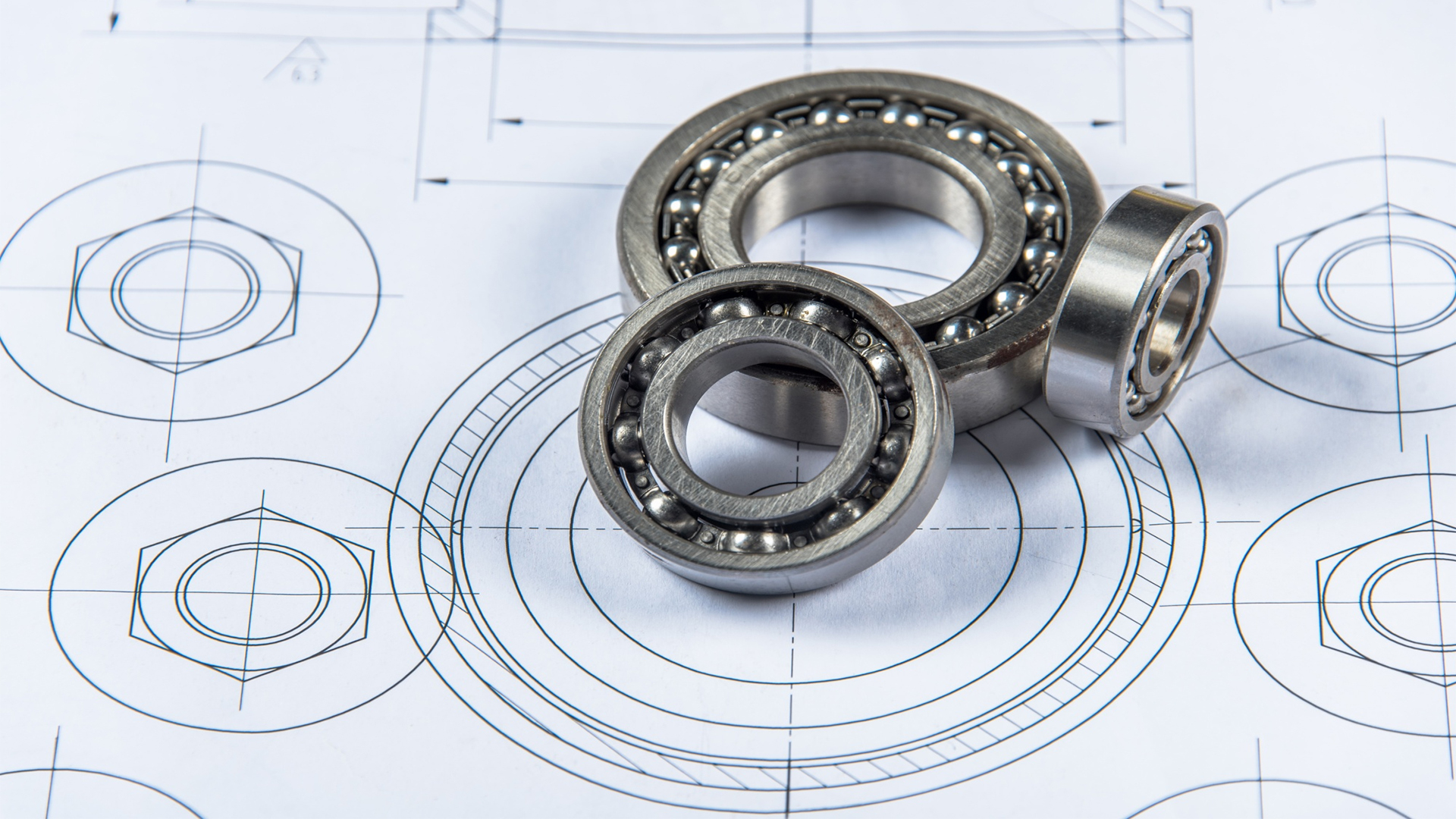
The Bearing school: Understanding Vibration Analysis
 Download Brochure
Course overview
Different backgrounds will be presented and introduced to the fundamentals of tribology of gears, gearboxes, bearings, and lubricants in this Training Bee course. The training will equip learners with the skills necessary to correctly service, examine, choose, maintain, and repair a variety of industrial gearboxes.
How are bearings lubricated?
Every maintenance engineer faces considerable challenges from bearings. Participants will gain a solid scientific and practical understanding of various equipment’s lubricating systems. The operating concept of bearings, kinds, applications for each type, and maintenance of bearings will all be heavily stressed in this Bearing Lubrication and Vibration Analysis course.
Every aspect and feature of bearing selection, maintenance, and lubrication systems, as well as their functions and component parts, will be covered in this Training Bee course. Additionally, the course provides hands-on training in component maintenance and repair and gearbox operating principles.

Introduction
Welcome to the training course “Bearing Lubrication and Vibration Analysis”! In the realm of machinery and equipment, bearings are essential for maintaining dependable functioning. With the help of this course, participants will gain a thorough understanding of two crucial components of machinery maintenance: vibration analysis and bearing lubrication. Whether you work as a mechanic, engineer, or maintenance expert, this course will provide you the information and abilities you need to improve machinery performance and lessen unscheduled downtime.
Participants will get a certificate acknowledging their expertise in bearing lubrication and vibration analysis techniques after successfully completing the Bearing Lubrication and Vibration Analysis training program and passing the final assessment.
We are The Training Bee, a global training and education firm providing services in many countries. We are specialized in capacity building and talent development solutions for individuals and organizations, with our highly customized programs and training sessions.
Join us on this learning adventure as we develop our knowledge of vibration analysis and bearing lubrication. We will discuss the essentials of machinery maintenance together so that the machinery in your company runs effectively and dependably. Let’s start down this road to superior machinery!

Learning Objectives
Upon completing Bearing Lubrication and Vibration Analysis, participants will be able to:
- Identify and distinguish various bearing components, such as cage assemblies, ball or roller bearings, plain bearings, and others.
- Classification, categorization, and the elements that make up each kind (each type’s design)
- Determine the bearings’ shaft and housing fits.
- Conduct failure analysis, condition monitoring, and appropriate handling to prolong the life of the bearings.
- Display proper installation, dismounting, and precision alignment techniques.
- Determine the causes of sudden bearing failures and estimate the life of the bearings.

Our Unique Training Methodology
This interactive course comprises the following training methods:
- Journaling – This consists of setting a timer and letting your thoughts flow, unedited and unscripted recording events, ideas, and thoughts over a while, related to the topic.
- Social learning – Information and expertise exchanged amongst peers via computer-based technologies and interactive conversations including Blogging, instant messaging, and forums for debate in groups.
- Project-based learning
- Mind mapping and brainstorming – A session will be carried out between participants to uncover unique ideas, thoughts, and opinions having a quality discussion.
- Interactive sessions – The course will use informative lectures to introduce key concepts and theories related to the topic.
- Presentations – Participants will be presented with multimedia tools such as videos and graphics to enhance learning. These will be delivered engagingly and interactively.

Training Medium
This Bearing Lubrication and Vibration Analysis training is designed in a way that it can be delivered face-to-face and virtually.

Course Duration
This training is versatile in its delivery. The training can be delivered as a full-fledged 40-hour training program or a 15- hours crash course covering 5 hours of content each day over 3 days

Pre-course Assessment
Before you enroll in this course all we wanted to know is your exact mindset and your way of thinking.
For that, we have designed this questionnaire attached below.
- In your company or industry, how does your current position or line of work connect to bearing lubrication and vibration analysis?
- Do you have any formal training or certification in vibration analysis, bearing lubrication, or a related field?
- Could you quickly describe how you’re present or prior roles have involved bearing lubricating techniques?
- Are you familiar with the foundations of vibration analysis, including its theories, methods of measurement, and importance in maintaining machinery health?
- What obstacles or problems have you run into in your professional experience with bearing lubrication and vibration analysis?
- Are there any industry standards or recommended techniques for analyzing vibration in bearings?

Course Modules
This Bearing Lubrication and Vibration Analysis cover the following topics for understanding the essentials of the Agile Workplace:
Module 1 – Bearings
- The purpose and use of bearings
- Classification: magnetic, frictionless, and non-friction bearings
- Factors influencing bearing type selection
- Identification bearing
- Types of friction bearings include plain journal, offset, multi-lobe, and tilting pad radial bearings.
- Other terms for friction bearings include oil film lubrication, influence of oil parameters on bearing behavior, and definition of oil whirl.
Module 2 – Failure Analysis of a Bearing to Reduce Friction
- Plain bearings failure analysis
- Housings and mounting for bearings
- Wear, friction, and fatigue: Lubrication & lubricants
- Pour and flash point, viscosity and viscosity index, and
Module 3 – Lubrication Mechanism
- Application of special lubricants such as composite, graphite, PTFE, and molybdenum sulfide
- Limitations on the use of lubricating oil and grease in general and on a regular basis
- Mist, circulation, splash, drop, oiler, spray, and other lubricating systems and features.
- Basics of lubricant oil analysis and its application to trends
- System for lubricating centrifugal compressors
- Reciprocating compressors’ lubrication system
Module 4 – Gears & Gearboxes
- Gearing Principles
- The purpose of the plant’s gearbox
- Applications for various gear types
- Reverse gear lash
- Tooth to tooth
- Selection Requirements for Gearboxes
Module 5 – Maintenance of a gearbox
- Analysis of gear and gear box failure
- Failure Modes of Gear Elements
- Patterns of typical gear failure
- Simple installation process
- Rebuilding and maintaining gearboxes
- Maintenance of a gearbox: disassembly and necessary examination
Post-course Assessment
Participants need to complete an assessment post-course completion so our mentors will get to know their understanding of the course. A mentor will also have interrogative conversations with participants and provide valuable feedback.
- Describe the main bearing lubrication principles you have studied about in this course. How are bearing life and performance affected by adequate lubrication techniques?
- Describe the basics of vibration analysis that were covered in the course. How can vibration analysis be used to assess the condition of machinery and spot potential problems?
- List and briefly describe the recommended procedures for bearing upkeep and maintenance that were covered in the course.
- Describe the various methods and equipment available for detecting vibration in machines.
- Describe how to analyze vibration data and recognize typical vibration patterns linked to mechanical failures.
- Describe the variables that affect the lubricant choice for a given bearing application. How do you choose the proper lubricating method for various machinery types?

Lessons Learned
The Crucial Importance of good Bearing Lubrication: Participants ought to have understood the crucial significance of good bearing lubrication. Poor or insufficient lubrication can cause early bearing failure and expensive downtime.
A Diagnostic Tool for Vibration: Vibration analysis is a potent diagnostic tool for machinery health. Participants should now be able to utilize vibration data to see possible problems and fix them before they get worse.
Preventive Maintenance Pays Off: In terms of bearing lubrication and vibration analysis, the training ought to have stressed the importance of preventive maintenance. Regular maintenance procedures can increase machinery life and lower repair costs. Examples include lubrication and vibration monitoring.
Participants ought to have gained knowledge of the importance of accurate vibration measurement. Meaningful findings depend on proper sensor placement, calibration, and data interpretation.