
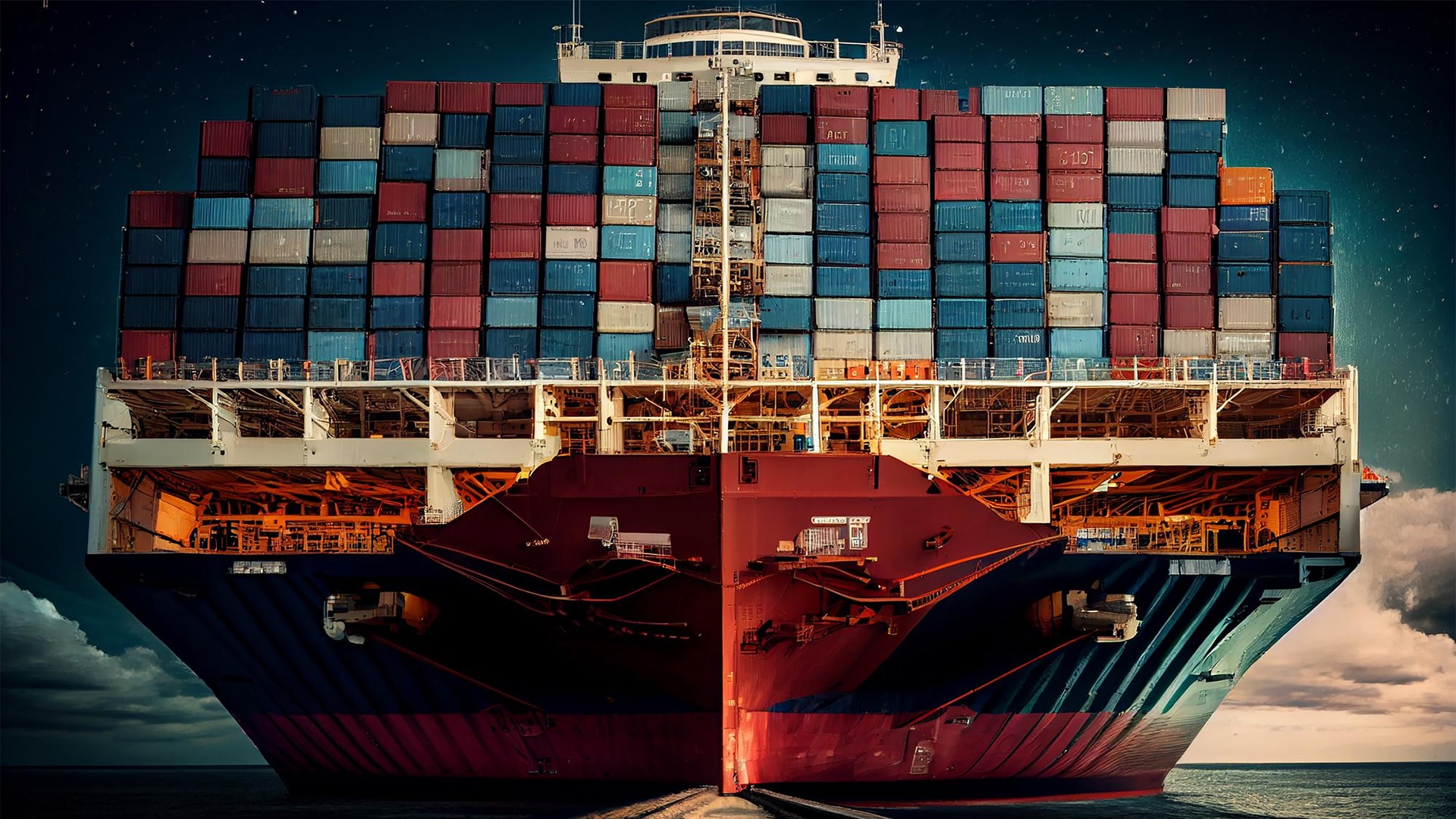
Take The Lead: Mini MBA In Maritime & Logistics Management
 Download Brochure
Course overview
Logistics is essential to supply chain management since it involves organizing, carrying out, and managing goods, services, and data from point of origin to point of consumption.
The key components of logistics are thought to be buying, production scheduling, customer service, inventory management, shipping and receiving, import and export operations, warehousing, and traffic and transportation. Companies see logistics as an essential supply chain blueprint. Its purpose is to oversee, arrange, and monitor the resources needed to move goods in a smooth, reliable, timely, and economical manner.
Describe maritime MBA.
Those looking for specific management skills in the maritime and logistics industry can apply for the Mini Master of Business Administration (Maritime & Logistics Management) program. Being at the vanguard of global trade, the maritime and logistics industries are exciting, dynamic, and demanding places to work.
Which MBA program is ideal for sailors?
This outstanding MBA program, provided by Training Bee, equips students to create answers for challenging problems that both domestic and global business operations encounter.
It provides useful and applied information suitable for jobs in management and higher-level professional roles. This course will help you develop your managerial knowledge, skills, and analytical abilities, which will help you advance in your career to more senior positions.

Introduction
Greetings and welcome to the 10-Day Maritime and Logistics Management Intensive Training! We are excited to start this extensive educational adventure with you. Maritime and logistics management plays a critical part in the dynamic world of global trade and supply chain activities, ensuring the success of organizations.
The purpose of this intensive training program is to provide participants a thorough understanding of the complexities of managing maritime and logistics operations, both practically and theoretically. We will cover a wide range of subjects over the course of the next ten days, from cutting edge technologies to international shipping rules, to make sure you acquire the knowledge and skills necessary to be successful in this quick-paced field.
We are The Training Bee, a global training and education firm providing services in many countries. We are specialized in capacity building and talent development solutions for individuals and organizations, with our highly customized programs and training sessions.
Our team of knowledgeable educators has extensive experience in the maritime and logistics management industries. They are committed to giving you insightful analysis, useful tactics, and the most recent best practices in the field.
Prepare yourself for an engaging and life-changing educational experience. Over the next 10 days, let’s explore the complex field of maritime and logistics management!

Learning Objectives
Upon completing Mini MBA in Maritime and Logistics Management, participants will be able to:
- Management experience and knowledge in a global context
- A thorough comprehension of how business concepts, such finance and management, are applied to the maritime and logistics sectors
- A unique event that centered on applying strategic and analytical thinking to these crucial areas
- Connect and combine information in the context of business and marine logistics.
- A solid grasp of the fundamental concepts, rules, and guidelines of the relevant business and marine logistics fields
- Understand the main ideas, concepts, and models that are accessible to solve various marine logistics and commercial difficulties and circumstances critically.

Our Unique Training Methodology
This interactive course comprises the following training methods:
- Journaling – This consists of setting a timer and letting your thoughts flow, unedited and unscripted recording events, ideas, and thoughts over a while, related to the topic.
- Social learning – Information and expertise exchanged amongst peers via computer-based technologies and interactive conversations including Blogging, instant messaging, and forums for debate in groups.
- Project-based learning
- Mind mapping and brainstorming – A session will be carried out between participants to uncover unique ideas, thoughts, and opinions having a quality discussion.
- Interactive sessions – The course will use informative lectures to introduce key concepts and theories related to the topic.
- Presentations – Participants will be presented with multimedia tools such as videos and graphics to enhance learning. These will be delivered engagingly and interactively.

Training Medium
This Mini MBA in Maritime and Logistics Management training is designed in a way that it can be delivered face-to-face and virtually.

Course Duration
This training is versatile in its delivery. The training can be delivered as a full-fledged 40-hour training program or a 15- hours crash course covering 5 hours of content each day over 3 days

Pre-course Assessment
Before you enroll in this course all we wanted to know is your exact mindset and your way of thinking.
For that, we have designed this questionnaire attached below.
- Give a brief description of the functions that the top three players in the marine sector play in international trade and transportation.
- Why is knowledge of international shipping regulations crucial for professionals in the maritime and logistics fields?
- Name the main forms of transportation in logistics and provide a brief explanation of each.
- What role does containerization play in logistics and the maritime industry?
- What are a marine port’s primary duties? Talk about the potential difficulties in port operations and how they could affect logistics.
- In what ways does efficient inventory control support the seamless functioning of maritime logistics?

Course Modules
This Mini MBA in Maritime and Logistics Management covers the following topics for understanding the essentials of the Agile Workplace:
Module 1 – Overview of Maritime Administration
- Scope and Concept of Maritime Logistics
- Definition of values in maritime logistics
- The strategic significance and utility of maritime logistics
Module 2 – International Logistics & Maritime Trade
- Supply chain management and logistics
- Transportation and logistics
- International maritime trade as opposed to global trade
Module 3 – Overview of the Global Maritime Sector
- Kinds of vessels
- Transportation and logistics
- Organization and accountability
Module 4 – Multimodal Logistics and Freight Transportation
- Benefits of multimodal transportation
- Qualities of multimodal transportation
- Containerization of transportation between modes
Module 5 – Transport by Containerization and Intermodal
- Growth of multimodal transportation
- Transport operators combined with their offerings
- Moving toward creative multimodal transportation
Module 6 – The Transportation Industry’s Digital Revolution
- Knowledge of large-scale data
- Synthetic intelligence and cybercrime
- Blockchain-based solutions used in logistics and shipping
Module 7 – New Maritime Concerns
- A business perspective from all angles
- Handling fluctuations and changes in port demand
- Social and environmental issues
Module 8 – Functional Scope
- An important component of data
- Management, both technical and operational
- Development of Communication Technology
Module 9 – Key Management Concerns
- Techniques for mitigation
- Risk and financial management
- Analysis of strategic management
- Handling financial analysis
Post-course Assessment
Participants need to complete an assessment post-course completion so our mentors will get to know their understanding of the course. A mentor will also have interrogative conversations with participants and provide valuable feedback.
- Write a brief summary of the main links you discovered during the intense training between logistics and maritime management.
- In what ways do these links enhance the effectiveness of international supply chains?
- Consider the effects of the international shipping laws that were covered in the course. In what ways might obstacles to regulatory compliance be overcome to promote seamless international trade?
- Talk about the maritime ports’ strategic importance to logistics operations. In what ways might effective port operations benefit the whole supply chain?
- Give an example of a logistical operation that uses containerization in practice. In what ways has containerization altered the international transportation scene?
- Describe the two practical inventory management techniques that were covered in the course. In what ways might these tactics be modified to accommodate various forms of marine logistics?

Lessons Learned
Comprehensive Perspective on the Supply Chain: The participants now have a comprehensive grasp of the supply chain and are aware of the complex relationships that exist between logistics and maritime management. It is imperative to integrate these components in order to optimize supply chain operations worldwide.
Handling Regulatory Obstacles: There is now an understanding of the intricacy of international shipping laws. The significance of strategically navigating these restrictions to enable smooth international trade has been imparted to the participants.
Crucial Function of Ports: It has been highlighted how strategically significant marine ports are to the logistics network. Participants are aware of how crucial successful port operations are to the success of the supply chain as a whole.
Impact of Containerization Revolutionary: In logistics, containerization has been acknowledged as a revolutionary force. Participants recognize how global transportation has been eased and the flow of commodities has been revolutionized by standardized containers.
Improving Inventory Control: After learning efficient inventory management techniques, participants have come to understand how important they are for preventing stockouts, reducing excess inventory, and maximizing the flow of commodities through the supply chain.
Visibility as a Crucial Element: The significance of supply chain visibility was emphasized during the training. Participants are aware that making proactive decisions and overcoming logistical obstacles require real-time visibility into the movement of commodities.
Preventive Risk Reduction: There is a growing awareness of possible hazards in logistics and maritime activities. Participants have the tools necessary to proactively recognize, evaluate, and reduce risks in order to maintain company continuity.