Refining Engineering Masterclass: Beginners To Advanced
 Download Brochure
Course overview
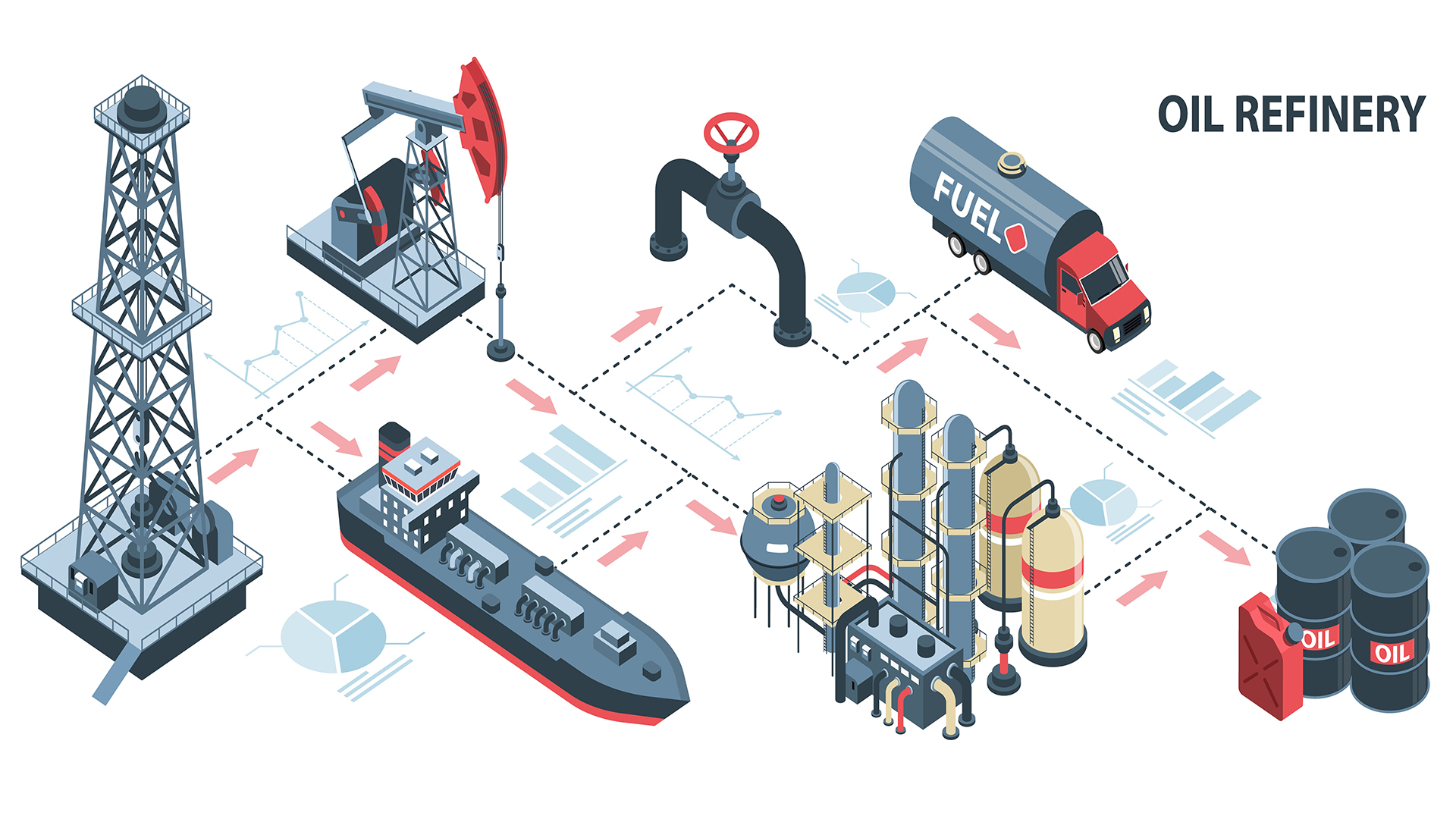
What is meant by the term petroleum refining? All of the chemical engineering procedures used in refineries to transform crude oil into different final products is referred to as petroleum refining. Large industrial complexes with numerous units and facilities are typically refineries.
Based on the refinery’s location, the products that are wanted, etc., each refinery has a different layout and set of facilities. Separation, conversion, and treatment are the three main steps in the petroleum refining process.
Production planning entails dissecting these procedures into their component parts and formulating a typical flow of actions that would result in a final product. When scheduling, time and deadlines are taken into account to give the plan a chronological order for precision. Planning and scheduling enable refineries to produce their maximum yield.
Participants will gain a thorough understanding of petroleum refining, including crucial concepts like production scheduling, planning, and yield optimization, by taking this Training Bee training course.
Participants organization will be able to successfully oversee and manage its petroleum refining processes thanks to the exposure you have gained in these areas. This will give you the opportunity to show off your talent and skill and open up new growth opportunities for your company.

Introduction
An introduction to petroleum refining engineering provides a thorough rundown of the procedures, scheduling, yield optimization, production planning, and economics involved in turning crude oil into useful petroleum products. The worldwide energy and petrochemical industries depend heavily on this sector; hence it is crucial to comprehend its foundations.
At the core of the petrochemical and energy sectors lies the dynamic and diversified area of petroleum refining engineering. The goal of this beginning course is to give students a fundamental grasp of the procedures, tactics, and economics involved in refining crude oil to create a variety of necessary products, such as petrochemicals, chemicals, and fuels.
In conclusion, an Introduction to Petroleum Refining Engineering provides a thorough introduction to the subject, giving students the knowledge and abilities, they need to successfully negotiate the complexities of crude oil refining, production scheduling, and petroleum industry economics.
We are The Training Bee, a global training and education firm providing services in many countries. We are specialized in capacity building and talent development solutions for individuals and organizations, with our highly customized programs and training sessions.

Learning Objectives
Upon completing Petroleum Refining Engineering: Process, Production Planning, Scheduling, Yield Optimization and Economics, participants will be able to:
- Thorough comprehension of petroleum refining, with a focus on scheduling, yield optimization, and production planning
- Exposure to cutting-edge strategies and tactics to improve operations’ quality and efficiency while accelerating and simplifying processes
- The capacity and knowledge to spot gaps and fill them in order to prevent needless delays or expenses for the organization, hence fostering its growth and development
- The expertise to teach other professionals about production scheduling, yield optimization, and planning best practices.
- The capacity to maximize yield optimization, drawing investors and enhancing the organization’s credibility and financial stability

Our Unique Training Methodology
This interactive course comprises the following training methods:
- Journaling – This consists of setting a timer and letting your thoughts flow, unedited and unscripted recording events, ideas, and thoughts over a while, related to the topic.
- Social learning – Information and expertise exchanged amongst peers via computer-based technologies and interactive conversations including Blogging, instant messaging, and forums for debate in groups.
- Project-based learning
- Mind mapping and brainstorming – A session will be carried out between participants to uncover unique ideas, thoughts, and opinions having a quality discussion.
- Interactive sessions – The course will use informative lectures to introduce key concepts and theories related to the topic.
- Presentations – Participants will be presented with multimedia tools such as videos and graphics to enhance learning. These will be delivered engagingly and interactively.

Training Medium
This Petroleum Refining Engineering: Process, Production Planning, Scheduling, Yield Optimization and Economics training is designed in a way that it can be delivered face-to-face and virtually.

Course Duration
This training is versatile in its delivery. The training can be delivered as a full-fledged 40-hour training program or a 15- hours crash course covering 5 hours of content each day over 3 days

Pre-course Assessment
Before you enroll in this course all we wanted to know is your exact mindset and your way of thinking.
For that, we have designed this questionnaire attached below.
- What is the main objective of the refining process for petroleum, and what is its relationship to the energy and fuel sector as a whole?
- Give a brief description of the main uses of at least three important petroleum products that are normally obtained during the refining process.
- What effects does a refinery’s choice of feedstock (crude oil) have on the goods it can produce? Give an illustration of how the composition of the feedstock influences the refining procedure.
- Give an example of a cracking process that turns heavy hydrocarbons into lighter products and define “cracking” in the context of petroleum refining.
- What are the primary obstacles to refinery yield optimization, and how may these be overcome to increase productivity and efficiency?

Course Modules
This Petroleum Refining Engineering: Process, Production Planning, Scheduling, Yield Optimization and Economics covers the following topics for understanding the essentials of the Agile Workplace:
Module 1 – Three Phases of Refining Oil
- Separation
- Conversion
- Treatment
Module 2 – Components of Refineries
- Front-end elements
- Units of process
- Supporting elements
- Dependencies amongst
- Subsequent elements
Module 3 – Refinery Processing Units
- Unit for distilling crude oil
- Unit for vacuum distillation
- Unit Naphtha Hydrotreater
- Unit for catalytic reforming
- Unit of Alkylation
- Unit of isomerization
- Unit for distillate hydrotreater
Module 4 – Primary Petroleum Refinery End-Products
- Distillates light
- In-between distillates
- Thick distillations
Module 5 – Production Planning and Scheduling Components
- Demand projections
- Module for enterprise production scheduling and planning
- Schedule in blocks
- Optimize the trim module
Module 6 – Planning and Scheduling for Production: Influential Factors
- Optimizing
- Operational analysis
- Internal creation of technologies
- Human element
Module 7 – Product Scheduling Aspects
- Feedstock, product prices, production targets, and primary unit throughputs
- Produce a rough schedule
- Timetable for product shipping by grade
Module 8 – Product Scheduling Types
- Docking schedule
- Feedstock Timetable
- Schedule process units
- Blending products and scheduling
- Product allocation
Module 9 – Refinery Financials
- Reduced residue
- Asphalt and leftover gasoline
- Complexity of refineries and netback
- Economic assessment
- Estimating costs
Post-course Assessment
Participants need to complete an assessment post-course completion so our mentors will get to know their understanding of the course. A mentor will also have interrogative conversations with participants and provide valuable feedback.
- Describe the main goals of petroleum refining and their connection to different product creation.
- Describe fractional distillation and how it works in a refinery to separate various hydrocarbon components.
- Give instances of at least three important petroleum products that are obtained by refining, along with an explanation of their main applications.
- What effects does a refinery’s choice of feedstock (crude oil) have on its production processes and range of products? Provide precise instances.
- Explain the hydrocracking procedure and its significance for transforming heavy hydrocarbons into useful products. Describe a practical use for hydrocracking.
- What are the primary obstacles to yield optimization in a refinery, and how may these obstacles be overcome to raise output and efficiency levels overall?

Lessons Learned
The Field of Petroleum Refining Is Complex and Diverse: Pupils will have gained knowledge of the various aspects of the petroleum refining sector, which include hydro processing, catalytic cracking, and crude oil distillation. Different petroleum products are produced as a result of each procedure.
The Fundamental Process of Refining Is Fractional Distillation: A key step in the refining process is fractional distillation, which divides crude oil into various constituents according to their respective boiling points. The importance of this process in the synthesis of different fuels and petrochemicals will be clear to students.
Optimization Is Vital: One of the most important aspects of refining is yield optimization. Pupils will comprehend that improving yield entails decreasing waste and inefficiency while maximizing the output of useful products.
Efficiency is Driven by Catalysts: By raising reaction rates and enhancing product quality, catalysts are essential to the refining process. The importance of catalysts in improving productivity and product performance will be understood by students.
Production Planning and Scheduling Matter: A refinery’s ability to operate smoothly and efficiently depends on effective production planning and scheduling. The capacity to balance resource availability, product specifications, and production demands will be taught to students.
Energy Efficiency Has a Big Impact on Economics: Energy efficiency has a big impact on refining’s economics in addition to being an environmental concern. Pupils will understand that using less energy results in lower costs and a less environmental effect.